
10 Facts About Steelmaking Coal
Short for time? Here are 10 quick facts about steelmaking coal to get you started.
#1. 70% of world steel production depends on steelmaking coal.
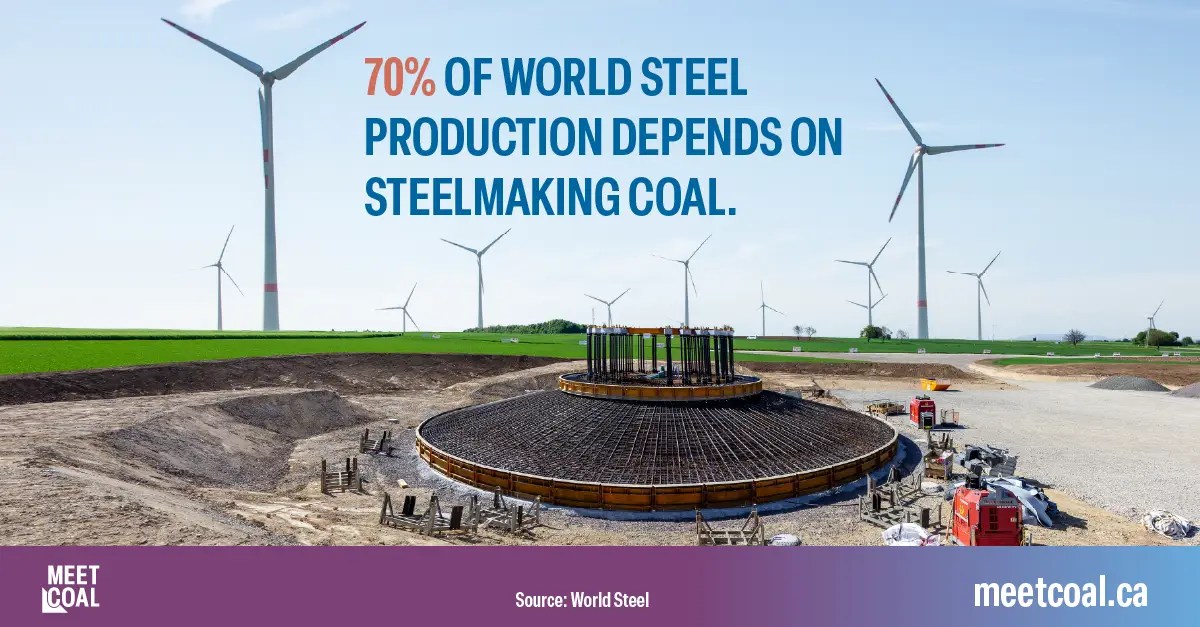
Modern steel production depends on steelmaking coal. 70% of world steel uses coal, and more than 90% of primary steel production (steel made from iron ore) is made using steelmaking coal. On average, this process requires about 770 kg of metallurgical coal to produce 1,000 kg of crude steel.
The remaining steel is produced using electric arc furnaces which primarily use scrap steel, and while there is primary steel production that doesn't use coal (predominantly natural gas) it is approximately 5–7% of primary production. This is largely because incredibly high-grade iron ore is required for the process — DR-grade iron ore accounts for only about 4% of global iron ore exports.
#2. Steelmaking coal demand isn't declining
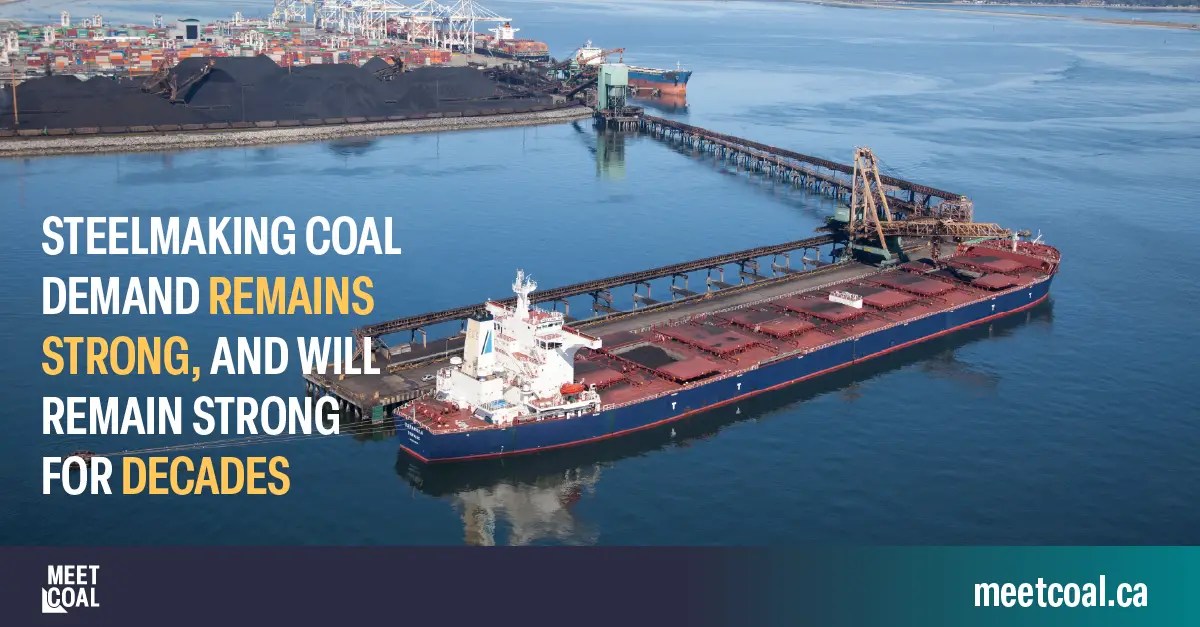
Over the past decade, steelmaking coal has grown and remained resilient. Its demand is rather unsurprisingly tied to demand for steel. Steel producing countries are also still investing in blast furnaces (particularly India) to meet global steel demand. Reputable agencies like the IEA see steelmaking coal demand being needed for decades to come.
#3. Steel demand is expected to grow
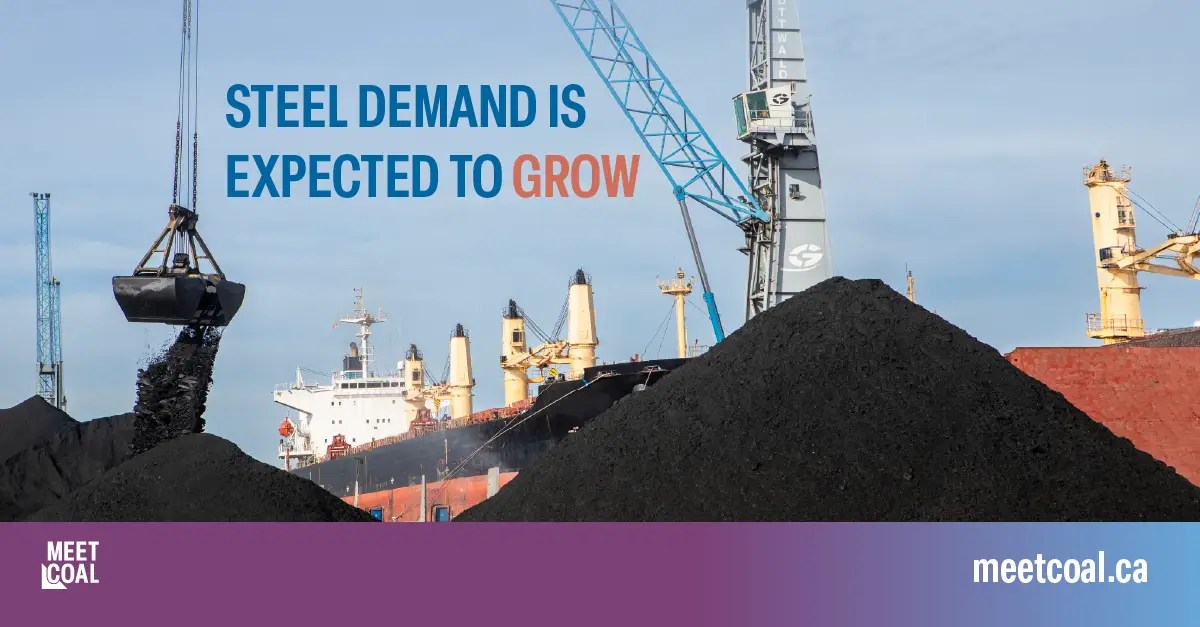
Over the next 25 years global steel demand is expected to grow significantly. This is a lot of steel! To meet this demand all sources of steel will be required, such as increased supply of scrap steel, but also most importantly, steelmaking coal.
#4. Over 10,000 Canadians earn their living in the coal sector
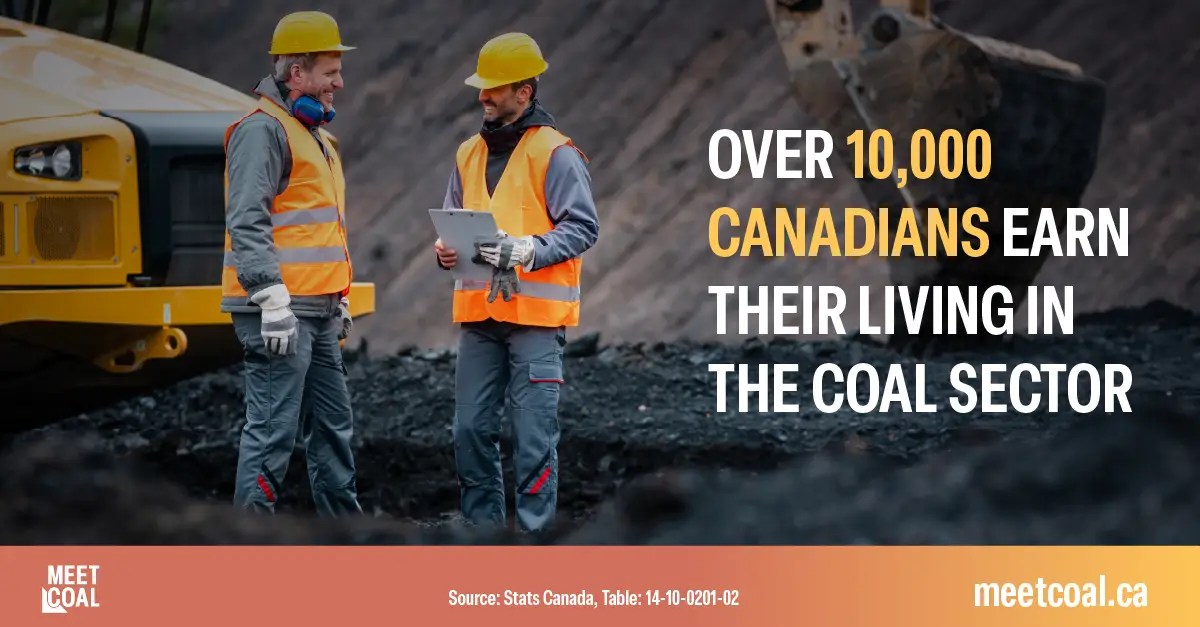
Thousands of Canadians earn their living, pay their mortgage and support their families working in Canada's coal sector. The Elk Valley, Canada's largest source of steelmaking coal, supports about 5,500 jobs alone. And these jobs in turn support other jobs. In a world where we will need more steel and more steelmaking coal to meet that steel demand, growing our steelmaking coal sector will create more of them.
#5. Coal mining jobs are good jobs
Natural resource jobs are critical to Canada's economic wellbeing. In fact, economists have concluded that natural resource jobs have kept Canada's middle class strong, and this is during a period where other countries have seen their middle class dwindle. Natural resources truly are our great advantage. Coal jobs are well paying, mortgage and family supporting jobs — averaging nearly $135,000 in compensation.
#6. Canada's coal exports are worth billions
Canada's coal exports are worth billions of dollars to our economy, and they have been British Columbia's largest export for years. In 2024 Canada exported nearly $10 billion in coal — and nearly 90% of that was metallurgical coal.
#7. Coal is 1/10th of Canada's mining GDP
Canadians support and want to see a growing mining sector, particularly critical minerals. And what mineral is more critical than the one that allows us to meet steel demand? At present, coal is a big part of Canada's mining GDP — at over 10% or $2.8 billion dollars. This makes it more valuable than copper, nickel, quarrying and many others.
#8. Selenium isn't unique to coal mining
Selenium occurs naturally in the Earth's crust and can substitute for sulfur in many sulfide minerals. Industrial selenium is commonly recovered as a byproduct of processing sulfide ores, particularly through copper refining. As a result, selenium and water management are not unique to coal mining; selenium is relevant across multiple mining and mineral-processing contexts.
#9. Selenium can be managed
Managing selenium begins with thoughtful and effective mine design. Does selenium management require significant planning? Yes, but with proper planning, technology and know-how, it can be done efficiently and effectively (McKenna & Gilron, 2022, 2021).
While selenium is a necessary element for life, it is true that, in excess, it can have harmful effects (Janz et al., 2010). However, modern mines are designed to incorporate selenium management, including modern mitigation and treatment practices, which can manage selenium well (Golder, 2020; McKenna & Gilron, 2022, 2021). Treatment methods in use at operating mines — such as the in situ anaerobic bioreactor at the Conuma Brule Mine in northeast BC — have achieved selenium removal of up to 94%.
#10. Hydrogen steel hasn't (and may never) replaced steelmaking coal
Very often, there are claims we don't need new coal mines because “green hydrogen steel in Europe” is being produced and is replacing steelmaking coal. This statement is doing a spectacular amount of heavy lifting. And while there are green hydrogen steel facilities — where green hydrogen is used as a reducing agent in DRI facilities to make a steel precursor called sponge iron — it simply isn't being done on a scale that is remotely close to displacing steelmaking coal. At present, green hydrogen-based steelmaking produces thousands of tonnes of steel per year, while steelmaking coal supports the production of hundreds of millions of tonnes — 1.3 billion tonnes, to be exact.
The first commercial-scale green hydrogen steel mill, Stegra, won't be online for some time. There is also the question of cost with hydrogen-reduced iron, as Stegra is one of the costliest mills ever built. Even Stegra's planned 2.5 Mt per year would equal only about 0.13% of global crude steel production — a meaningful project, but not evidence that hydrogen steel is replacing steelmaking coal at scale.
Furthermore, hydrogen-based steelmaking, and methane-based DRI for that matter, requires very high-quality iron ore, and this level of quality is present in only about 4% of globally traded ore.
Know the facts? Add your name.
Support a responsible Canadian steelmaking coal industry.